
Why Takashi Murakami’s Superflat Universe Commands Such Value
Takashi Murakami’s art moves effortlessly between museum halls, fashion runways, and collector walls. This fluid cultural presence—combined with rigorous craft and savvy scarcity—explains why his works have become among the most coveted in contemporary art.
The Superflat Value: Culture, Craft, and Scarcity
Few contemporary artists have built a visual universe as instantly recognizable—and as broadly desired—as Takashi Murakami. His brightly smiling flowers, disarming characters, and hypnotic color fields feel at once playful and profound, speaking to a global audience that spans collectors, museums, and pop culture devotees. When we ask what makes Murakami’s works so valuable, we arrive at a compelling convergence: an incisive cultural thesis, exacting production values, and disciplined scarcity that together create enduring demand.
A Concept that Became a Movement
Murakami’s “Superflat” concept reframed how we see the boundaries between high art and popular culture. Drawing from Edo-period aesthetics, Nihonga training, anime, and manga, Superflat proposed that visual culture in contemporary Japan—and by extension, globally—operates on a flattened plane where distinctions between fine art, design, and commerce dissolve. Rather than lamenting this condition, Murakami turned it into an engine for originality: he leveraged the flatness of graphic planes, saturated color, and stylized figures to construct a language capable of both joy and critique.
For collectors, this matters because value accrues where ideas meet execution. Superflat is not merely a look—it’s a theory embodied by a studio practice, an entrepreneurial model, and a consistent body of work. Murakami’s art doesn’t just depict a culture of consumption; it inhabits and studies it, synthesizing influences into a coherent authorship. That intellectual clarity, coupled with visual immediacy, makes his works resonate across decades, not just seasons.
The Studio as Atelier: Precision, Layers, and Longevity
Behind the exuberant surfaces is a workshop ethos renowned for rigor. Murakami’s Kaikai Kiki studio functions like a contemporary atelier, where processes are standardized and perfected: from meticulously primed canvases to layered silkscreens, precision linework, and hand-finishing. Works often integrate archival pigments, shimmering metallics, and high-gloss varnishes that amplify color while protecting the surface.
Collectors notice—and trust—this consistency. The finish is not merely cosmetic; it’s architectural, designed to maintain chromatic intensity and crisp contours over time. Conservators regularly comment on the stability of Murakami’s materials compared with more experimental, less controlled practices. In an era when the technical longevity of contemporary works can be uncertain, Murakami’s disciplined production underpins confidence and, consequently, value.
Icons and Affect: Flowers, DOB, Skulls, and Cosmic Fields
Murakami is a master of iconography. The smiling flower is perhaps the most universal emblem of joy in contemporary art—an image that is simple enough for a child to adore, yet complex in its cultural references and variations. Mr. DOB, Murakami’s shape-shifting avatar, oscillates between cute and uncanny, while the skull series navigates mortality through candy-colored repetition. Large fields of radiating flowers or chromatic abstractions evoke a cosmic calm that appeals to both minimalists and maximalists.
These motifs are not interchangeable graphics; they are emotional instruments. Collectors often speak of the uncanny feeling his works evoke: the way a flower field can shift from euphoric to meditative, or how a DOB composition can toggle between laughter and disquiet. That emotional elasticity—paired with immaculate craft—builds repeat engagement and long-term attachment in collections.
Featured Works
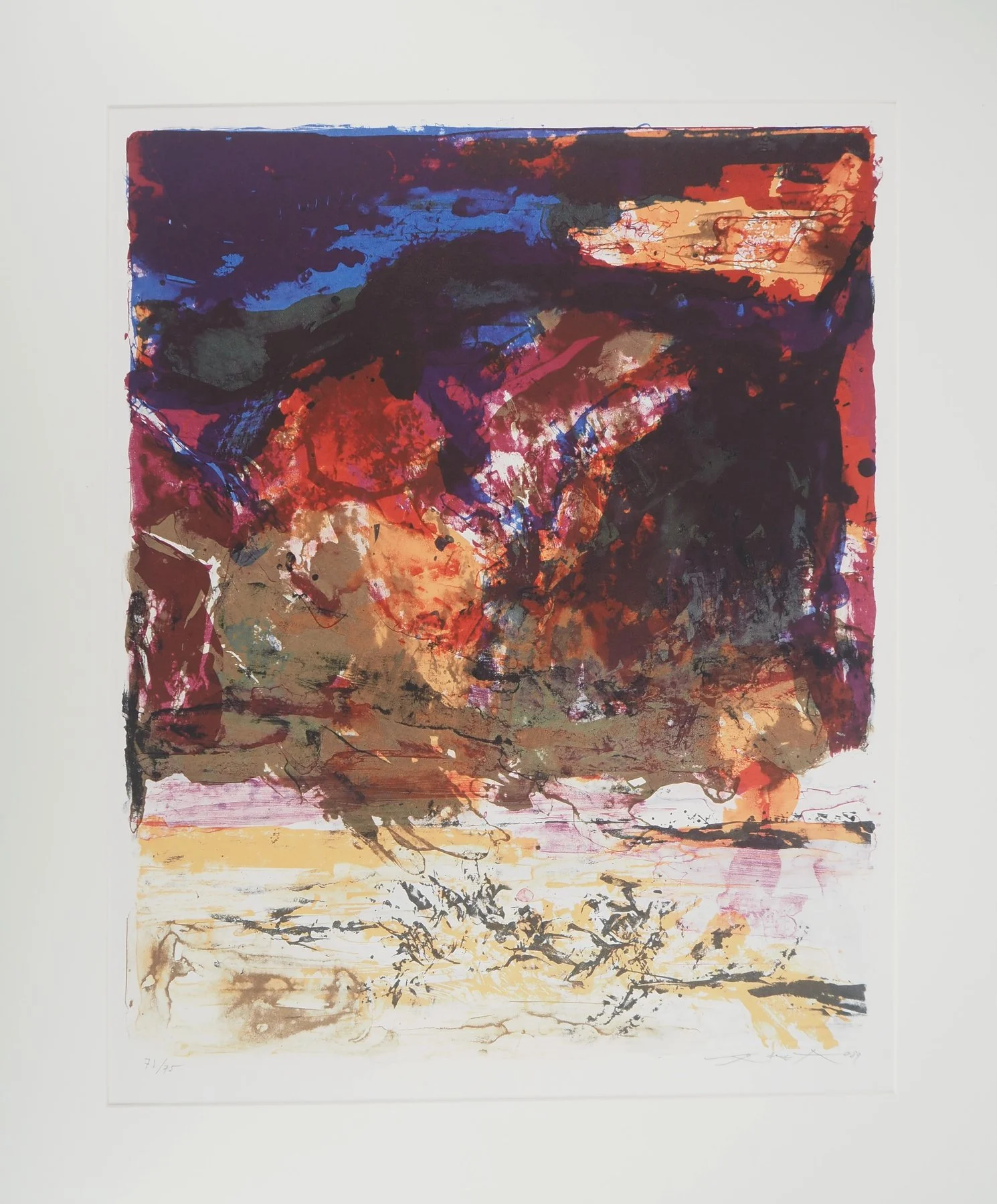

Scarcity, Editions, and the Logic of Desire
Value in the contemporary market is a function of demand and managed supply. Murakami’s oeuvre includes distinct tiers: unique large-scale paintings (the rarest and most sought-after), limited-edition prints and multiples (with clearly defined edition sizes, signatures, and seals), and sculptures that bridge collectible art and design. This clear hierarchy helps collectors navigate entry points and calibrate expectations.
Edition integrity matters. Works with Kaikai Kiki certificates, embossed seals, and verified signatures offer a transparent provenance path that bolsters liquidity. Murakami’s careful management of image releases, scale, and color variants maintains appetite while avoiding oversaturation. Simply put: clarity plus scarcity equals confidence.
Crossovers Without Compromise
Murakami’s collaborations across fashion, music, and entertainment cement his cultural recognition, yet they rarely dilute the core studio output. Instead, they expand the audience for his fine art, returning attention to his canvases, prints, and sculptures. For collectors, this orbit effect can be powerful: institutional exhibitions and cross-sector visibility amplify both brand and scholarly relevance, supporting a resilient market ecosystem.
What Collectors Look For
- Scale and presence: Large works command immersive attention and often lead the market, though small, rare variants can be equally prized. - Series significance: Flowers, DOB, Skulls, Arhat, and abstraction series each carry distinct narratives and collector followings—knowing the arc of a motif informs value. - Colorways and rarity: Certain palettes and compositions were produced in tighter numbers or specific contexts; these subtleties can materially affect desirability. - Condition and provenance: Surface perfection is integral to Murakami’s language. Pristine condition, original packaging for editions, and Kaikai Kiki documentation are critical. - Cohesion within a collection: Murakami pairs powerfully with both historical abstraction and contemporary design, creating compelling dialogues that enhance perceived value.
Longevity: An Artist of His Era—and Beyond
Why do Murakami’s works hold value over time? Because his practice is anchored in a clear idea, executed through refined technique, and sustained by cultural relevance. Superflat anticipated an image-saturated world; Murakami’s studio perfected the language to thrive within it. The result is a body of work that feels timely and timeless—capable of delight, reflection, and critique in equal measure.
For collectors, that rare combination—conceptual integrity, technical excellence, and smart market stewardship—explains why Murakami’s universe continues to command attention at every level. Whether you’re acquiring a small edition or a museum-scale painting, you’re entering a cohesive narrative authored by a singular artist who turned the “flatness” of contemporary culture into a profound, enduring art.
Conclusion: Value Beyond Price
At its best, value is more than a price tag—it is the sustained ability of a work to move us, represent its time, and reward close looking. Murakami’s art does precisely that. The flowers smile, the colors hum, and the surface gleams—not only because they’re fashionable, but because they’re expertly made and conceptually sure-footed. In a crowded art world, that combination is rare, and rarity—intellectual and material—remains the ultimate driver of value.