
Where to Buy Abstract Art Online: A Curator’s Map
Abstract art is a living tradition shaped by material intelligence and conceptual clarity. This guide explains where to buy abstract art online with connoisseurship—reading materials, editions, provenance, and display—so your choices endure beyond the screen.
Abstract art rewards careful looking. In a screen-based marketplace, the question of where to buy abstract art online is inseparable from how to read what you see—materials, editions, provenance, and images that compress depth into pixels. A thoughtful purchase begins with context: what kind of abstraction speaks to you, which techniques sustain that language, and how a seller supports your ability to verify and preserve the work.
For a century, abstraction has been the laboratory of modern vision—from the quiet lucidity of postwar minimalism to the chromatic fields and material experiments that followed. Online, this plurality is a strength if you translate your preferences into precise criteria. What pigments and papers carry the color charge you want to live with? Which reliefs or mixed-media surfaces project light into the room? Finding the right work becomes a method, not a guess.
Abstraction’s living tradition
Abstraction did not retreat from the world; it reconfigured it. Post‑1945, artists in Europe and beyond sought a reset. Some pursued radical reduction, privileging light, rhythm, and surface as primary subjects. Others united Eastern calligraphic breath with Western oil and ink, expanding the image field into luminous ambiguities. These lineages persist today—from measured minimal vocabularies to gestural atmospheres and process-driven reliefs.
Understanding this heritage helps you navigate online offerings. A red monochrome with punctured surface speaks to ritualized labor and optical calm; an ink-washed composition might unfold like weather, not picture. When you can name the language—monochrome, lyrical abstraction, material/process, minimal relief—you can better evaluate technique, condition, and relevance, even through a screen.
Where to buy abstract art online
Reputable primary galleries: Many now present full collections online, with precise materials, edition details, studio provenance, and conserved images under raking light. You gain curatorial framing and post-sale support.
Artist studios: Direct acquisition can be rewarding when the artist’s practice is documented—work lists, inscriptions, and stable materials. Request high-resolution images, video in angled light, and a formal invoice or certificate.
Curated platforms and print publishers: These can offer disciplined editions with clear marks and paper stock, ideal for building a focused wall. Assess the publisher’s track record and edition management.
Auction houses: Useful for established names with catalogued provenance and condition reports. Read estimates as signals, not absolutes, and factor buyer’s premium and shipping.
Across all channels, look for clarity: full material specs, edition inscriptions, condition notes, and transparent returns.
Materials, methods, and signals
Materials are not neutral; they make meaning. In paintings, oil offers depth through refractive layers but may yellow subtly over decades; acrylic delivers saturated planes and stable films; supports range from linen (dimensional stability, elegant weave) to cotton duck and panel. Relief and mixed-media works may integrate wood, metal, or nails, where joinery, fastening, and ground preparation determine longevity.
Works on paper demand crisp disclosures: sheet type (e.g., cotton rag, Kozo), weight, deckle edges, and whether inks are dye- or pigment-based. Ask for daylight and raking-light photos to reveal embossment, impasto, or micro-cracking. For sculpture, note casting method, resin type, or alloy, plus patina and mounting hardware. The more exact the listing, the more likely the craft is disciplined—and the seller conscientious.
Reading editions and marks
Editions translate scarcity into precision. On prints, look for fraction (e.g., 12/50), signature (pencil or plate), date, and printer/publisher chop. Artist’s Proof (AP) or Hors Commerce (HC) should be clearly limited and historically typical for the publisher. Paper stock matters: archival cotton rag (e.g., 300 gsm) signals durability. On screenprints, edges should be sharp, with even ink deposit and no scuffing at high-saturation fields; lithography reveals subtle grain and layered transparency; intaglio shows plate mark and ink bite in the fibers.
For unique works on paper, inscriptions such as “unique,” studio numbering, or verso annotations help anchor provenance. Request macro images of signatures, edition notations, and chops. If the seller is vague about edition size, printer, or paper, pause—the economy of prints is clarity.
Artists, movements, and resonance
For postwar reduction, the ZERO ethos remains instructive: light, rhythm, and elemental materials calibrated with ritual calm. Within that universe, Bernard Aubertin forged a language of red, nails, and fire—objects that turn matter into luminous field. His reliefs and works on paper illustrate how minimal means can carry maximum optical and haptic charge online when documented well.
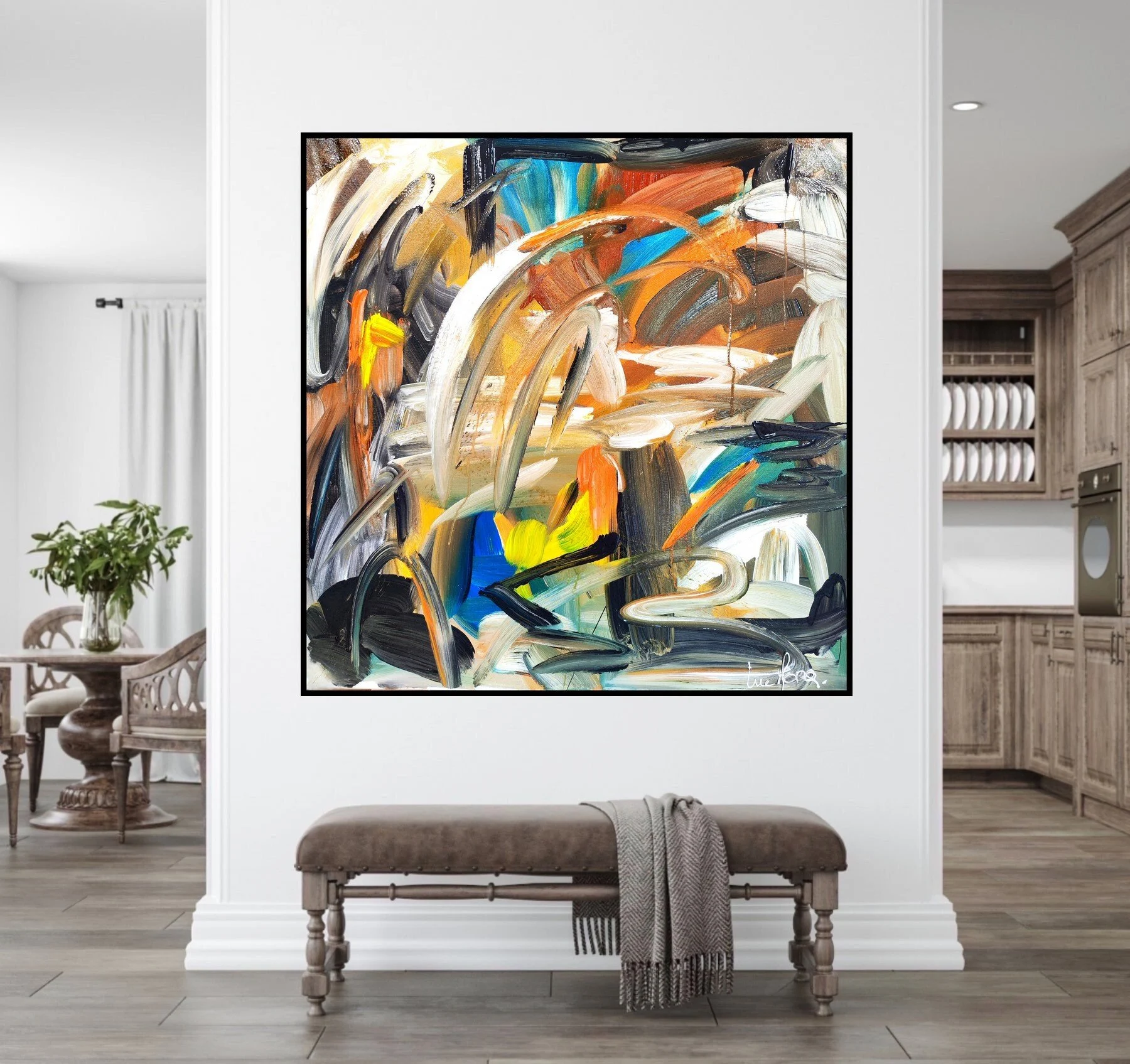
For East–West abstraction’s atmospheric scale, Zao Wou-Ki (赵无极) unites ink’s breath with oil’s depth across paintings and prints. In contemporary practice, Henry Escobar advances material and process as subjects—pigment suspensions, layered grounds, and tactile surfaces that reward close viewing. Across these examples, technique is semantically loaded: nails articulate rhythm; brush vapor articulates space; sedimented paint articulates time.
These references are not prescriptive checklists but lenses. When evaluating an online listing, ask which lineage the work extends and whether its materials and facture genuinely serve that language.
Due diligence and safe display
Verification online is a discipline of requests: high-resolution full fronts and details; angled light to read gloss and relief; straight-on edges to detect warping; clear versos for stamps and inscriptions. Ask for color-calibrated images or a video beside a standardized color card. Confirm measurements unframed and framed, and whether glazing is UV‑filtering.
Certificates should specify title, year, medium with granular detail (e.g., acrylic and pumice on linen), size, edition/fraction if applicable, and issuer identity (gallery, studio, publisher). For established artists, provenance entries (acquisition date, prior collections, exhibitions) organize the work’s biography. Shipping demands double‑boxing for framed works, rigid corner protectors for canvases, and humidity buffers for works on paper. Ensure the seller’s return window begins at delivery, not dispatch.
Display completes the work’s meaning. For works on paper, use museum-grade mounts, neutral pH backings, and UV glazing; for canvases, float frames that avoid compressing edges; for reliefs, anchors into studs or masonry. Light levels should respect materials: saturated prints prefer moderate lux and no direct sun; glossy monochromes read best under diffuse, angled light.
Strategy for a lasting collection
Build a collection as a conversation, not a shopping list. Begin with one or two anchor works that clarify your compass—perhaps a disciplined monochrome and a lyrical work on paper—then expand through variations of surface, scale, and rhythm. Mix mediums intelligently: a limited edition can stabilize budget while a unique relief brings tactile gravity. Track how you respond over time; attention is a currency.
Markets reward clarity and patience. Signals such as material quality, edition discipline, and coherent provenance shape long-term value more reliably than hype cycles. For a broader view of these currents, our essay on market signals outlines how connoisseurship and emotion interact online and off: "Signals and Sentiments".
Finally, cultivate relationships with sellers who educate rather than pressure, who document rather than gesture, and who steward the work beyond the sale. Abstraction thrives in that ecology of care—on the wall and across time.
Conclusion
Buying abstract art online works best when you treat the screen as an instrument, not an obstacle. Read materials with precision, editions with discipline, and images with a conservator’s eye. Anchor choices in art-historical lineages that speak to you and in sellers whose clarity matches your curiosity. With that method, each new acquisition extends a living tradition—and fills your rooms with light, rhythm, and thought.