Bernard Aubertin
3 Verfügbare Werke
Biografie
Bernard Aubertin (1934–2015) was a French artist and a vital figure of the ZERO movement, renowned for his uncompromising monochrome red works and radical use of fire as a creative force. From his seminal Tableaux Rouges to combusted match and nail reliefs, Aubertin explored the thresholds between creation and destruction,...
Bernard Aubertin (1934–2015) was a French artist and a vital figure of the ZERO movement, renowned for his uncompromising monochrome red works and radical use of fire as a creative force. From his seminal Tableaux Rouges to combusted match and nail reliefs, Aubertin explored the thresholds between creation and destruction, time and energy. His work has been widely exhibited and remains influential within postwar and contemporary avant‑garde discourse.
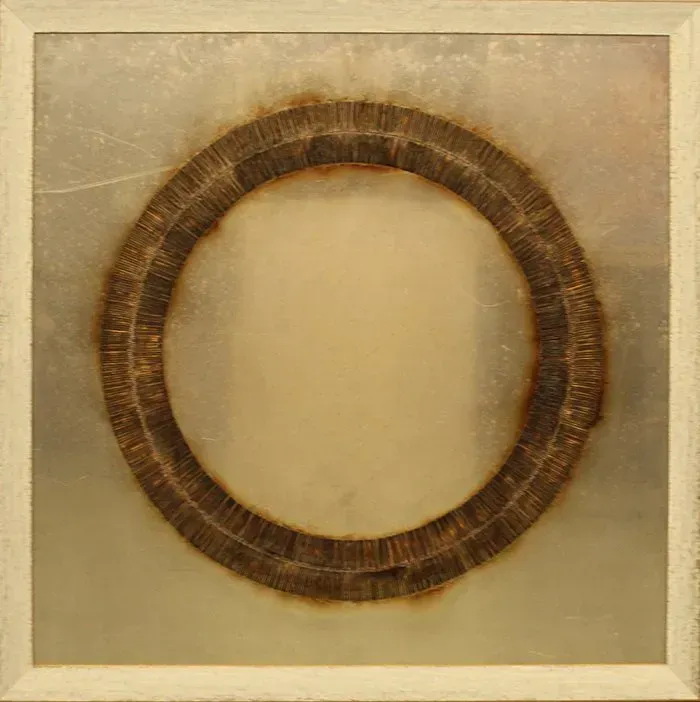
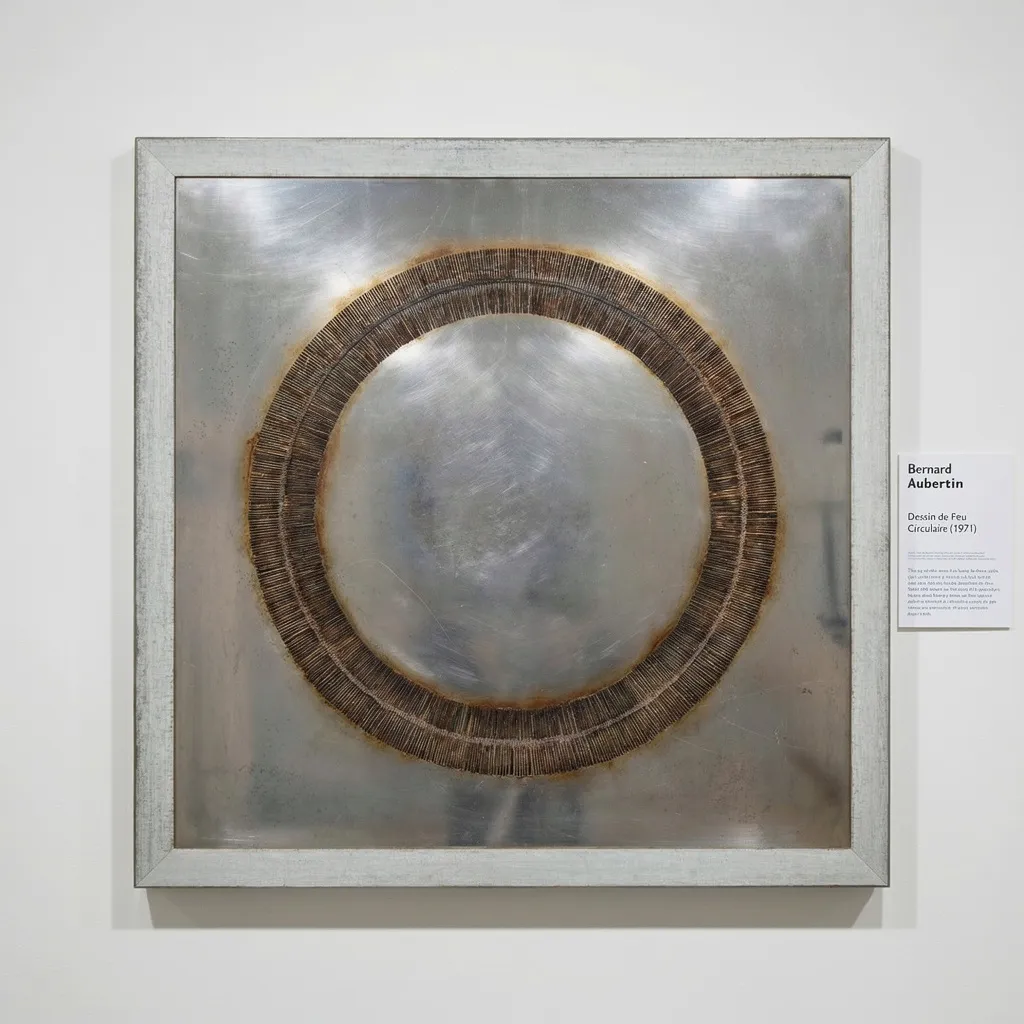
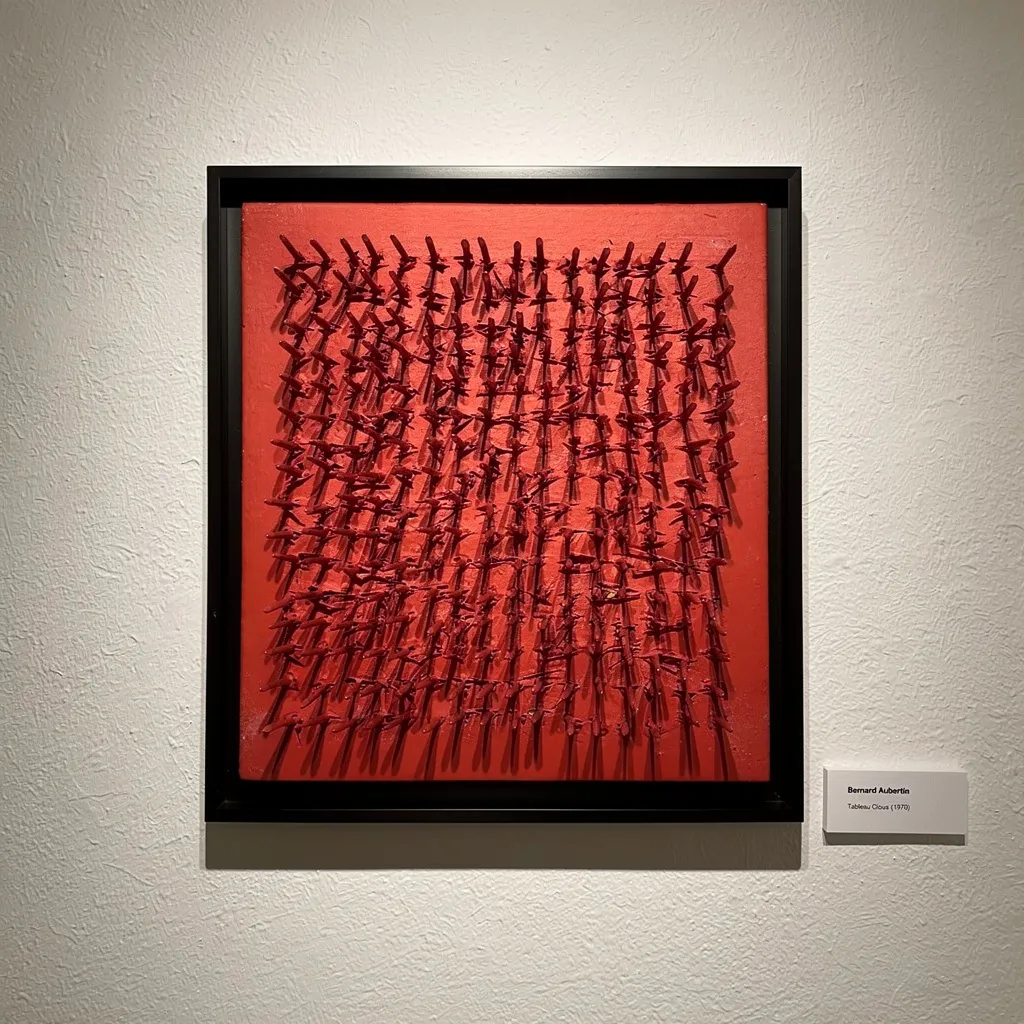
Born in 1934 near Paris, Bernard Aubertin emerged in the late 1950s with a singular vision that would define his career. A pivotal encounter with Yves Klein’s monochromes in 1958 catalyzed Aubertin’s commitment to the absolute of color, leading him to dedicate himself to red as a total field—both material and metaphysical. By the turn of the 1960s he aligned with the international ZERO network, sharing its pursuit of a reset in postwar art: a move toward clarity, energy, and the reduction of ego in favor of elemental phenomena. Aubertin’s early Tableaux Rouges established his idiom: densely worked planes of red pigment that transformed the canvas into a site of vibration and intensity. From there he extended painting into relief and action, creating rhythmic surfaces with hammered nails and structuring canvases with meticulously arranged matches—then igniting them so that fire completed the composition. In his Combustions, burned books and charred panels, he made flame a co‑author, allowing chance, heat, and time to inscribe the work. These “actions of fire” were not spectacle alone; they were rigorous inquiries into the material limits of painting and the choreography of entropy. Influenced by the radical reductions of Klein, the spatial investigations of Fontana, and the experimental ethos of ZERO, Aubertin sought a zero‑degree of painting where gesture yields to process and phenomena. Red, for Aubertin, was not merely a color but a totality—life force, danger, ritual—capable of containing both presence and void. By courting risk and welcoming indeterminacy, he forged a philosophy in which the artist sets conditions and the work is completed by the energies it summons: combustion, rhythm, and the passage of time. From the 1960s onward Aubertin’s work was exhibited across Europe in key ZERO group presentations and numerous solo shows, with renewed international attention in the 2000s and 2010s. His contributions have been recognized in major retrospectives on ZERO, including museum surveys that reappraised the movement’s global reach. Aubertin died in 2015 in Reutlingen, Germany, leaving a legacy of works in prominent public and private collections and an enduring influence on contemporary practices that engage matter, monochrome, and performance of process.
Künstlerisches Statement
"I seek the point where painting surrenders to phenomena—where red, as total presence, becomes a field for energy, rhythm, and risk. By setting conditions for fire, chance, and time, I let the work complete itself, revealing creation and destruction as two faces of the same act."
Verfügbare Werke
Entdecken Sie die Sammlung der Kunstwerke von Bernard Aubertin, die derzeit zum Kauf verfügbar sind.

Interesse an weiteren Werken?
Kontaktieren Sie uns für Informationen über kommende Werke oder Aufträge von Bernard Aubertin.
Anfrage zu weiteren Werken