
Henry Escobar: Materiality and Process
Henry Escobar’s contemporary abstractions stage matter itself as a primary subject. This curated essay reads his materials, techniques, and process, situating the work within postwar lineages while offering clear tools for connoisseurship and collecting.
Material has long been the quiet protagonist of abstraction, but in Henry Escobar’s practice it steps to center stage. Rather than treating pigment as a mere vehicle for form, he frames matter—its density, gloss, absorption, and resistance—as the actual drama. In contemporary abstraction, this choice feels timely: when images flood our screens, the physical grain of a painting becomes a site of attention and renewal. Escobar’s work, grounded in process, invites viewers to read surfaces the way one reads an intricate landscape.
The relevance is art-historical and practical. Postwar artists interrogated the truth of materials as rigorously as they pursued composition; today, collectors value that intelligence not only for its beauty but for its longevity. Understanding how a surface is built—what supports it, how the binder carries pigment, when the hand intervenes—equips a viewer to select and live with works whose tactile presence remains vivid.
Lineages of Material Thinking
Contemporary abstraction inherits twin impulses from the mid-twentieth century: a freedom of gesture and a discipline of reduction. In Europe, movements such as ZERO advocated clarity, light, and restraint. In the United States and elsewhere, process-oriented practices tested gravity, viscosity, and chance. Henry Escobar’s approach engages these lineages without citation; he absorbs their lessons into a language where surface logic and temporal decisions shape the image.
The result is neither pure spontaneity nor pure system. Material intelligence governs when layers are added or withheld, when open space carries weight, when viscosity and drag create rhythm. This negotiation between plan and discovery—between the intent of the artist and the behavior of matter—anchors Escobar’s work within a broader conversation that values material truth as the foundation of contemporary abstraction.
Surfaces, Binders, and Tools
At the most concrete level, contemporary abstract painting begins with the support. Canvas or linen offers elasticity and a subtle weave; wood panel offers rigidity and a ready smoothness. Grounds—often gesso or an acrylic dispersion—seal, level, or intentionally accentuate texture. In works by Henry Escobar, the support’s response to pressure, scraping, or flooding is part of the visible grammar.
Binders matter as much as supports. Acrylic polymer carries color with speed and flexibility, drying into a thermoplastic film with relatively stable gloss. Oil, slower to cure, can deliver lush saturation and long blending windows but demands time, ventilation, and conservation care. Contemporary mediums (gels, pastes, retarder, flow improver) alter rheology—how paint moves—and therefore the trace of gesture. Tools—brushes, knives, squeegees, rags—leave distinct signatures: sharp scraping reveals ground; broad pulls unify; stippling disrupts light.
Surface reading becomes a connoisseur’s practice. Edges reveal decisions: do layers meet cleanly or feather, do overlaps index time, does gloss shift across planes to choreograph reflection? Such clues are the index of process, telling how the painting was built and how it will age. For a deeper look at how color operates across these structures, see the guide on chromatic perception, Seeing With Color: Abstraction and the Mind.
Henry Escobar’s Material Philosophy
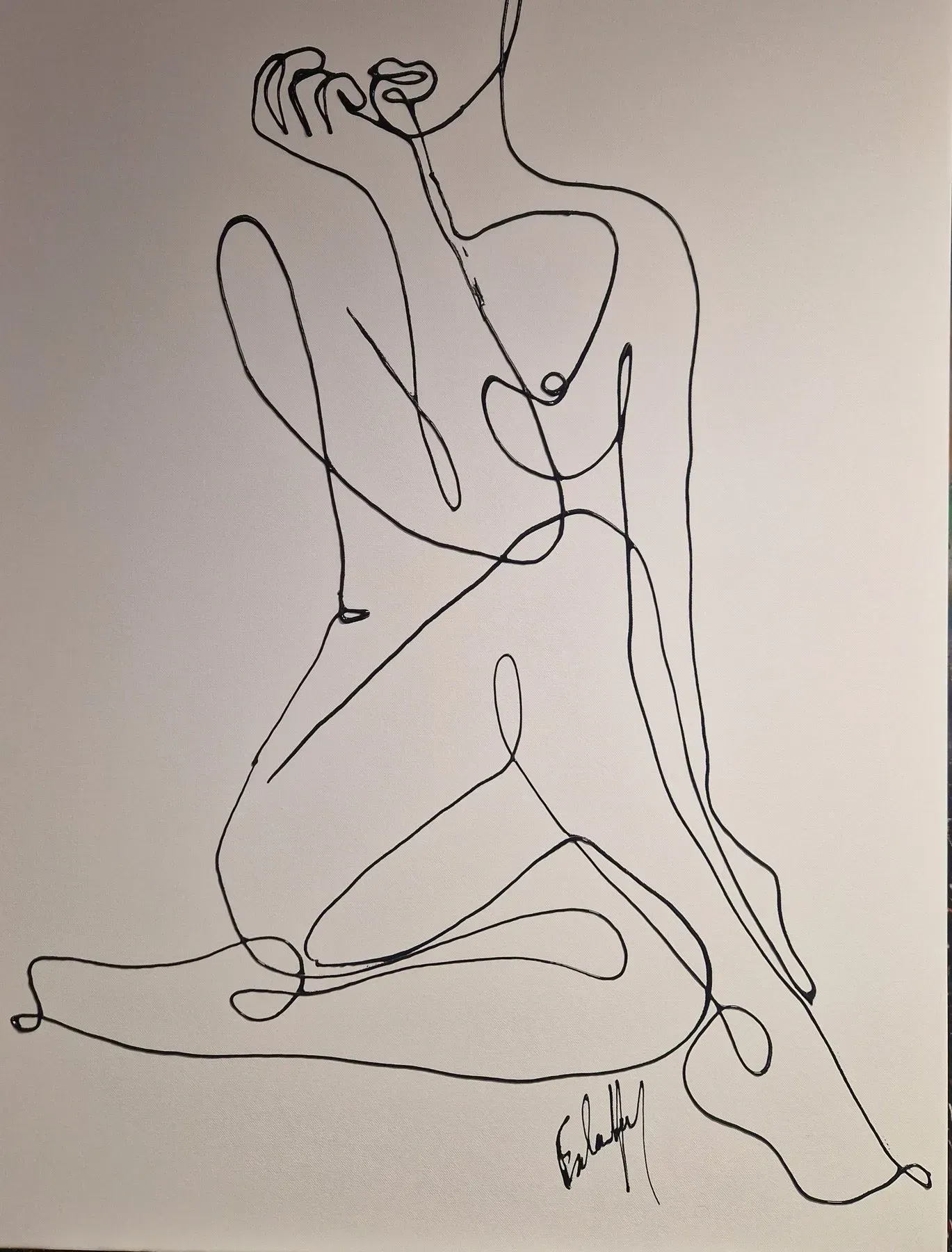
Escobar’s abstraction is less about depicting form than staging encounters between pigment, medium, and support. Material is not a neutral conduit; it has agency. When viscosity is high, drag preserves the wrist’s pressure; when fluidity increases, gravity becomes collaborator. Decisions are calibrated to time: add while tacky to create adhesion ridges; add when dry to create clarity of stratified planes; remove to let the ground speak—negative space as constructed silence.
This philosophy favors a disciplined palette of actions. Layer, pause, test reflection, adjust density. The hand negotiates with resistance—the weave of canvas, the give of gesso, the slip of acrylic. Where many abstract pictures aim at exuberant gesture, Escobar’s emphasis on materials generates a quieter intensity. Tension arises from structural choices: where light is absorbed, where it scatters, how micro-topography catches shadow and directs the eye.
Featured Works
Color as Structural Agent
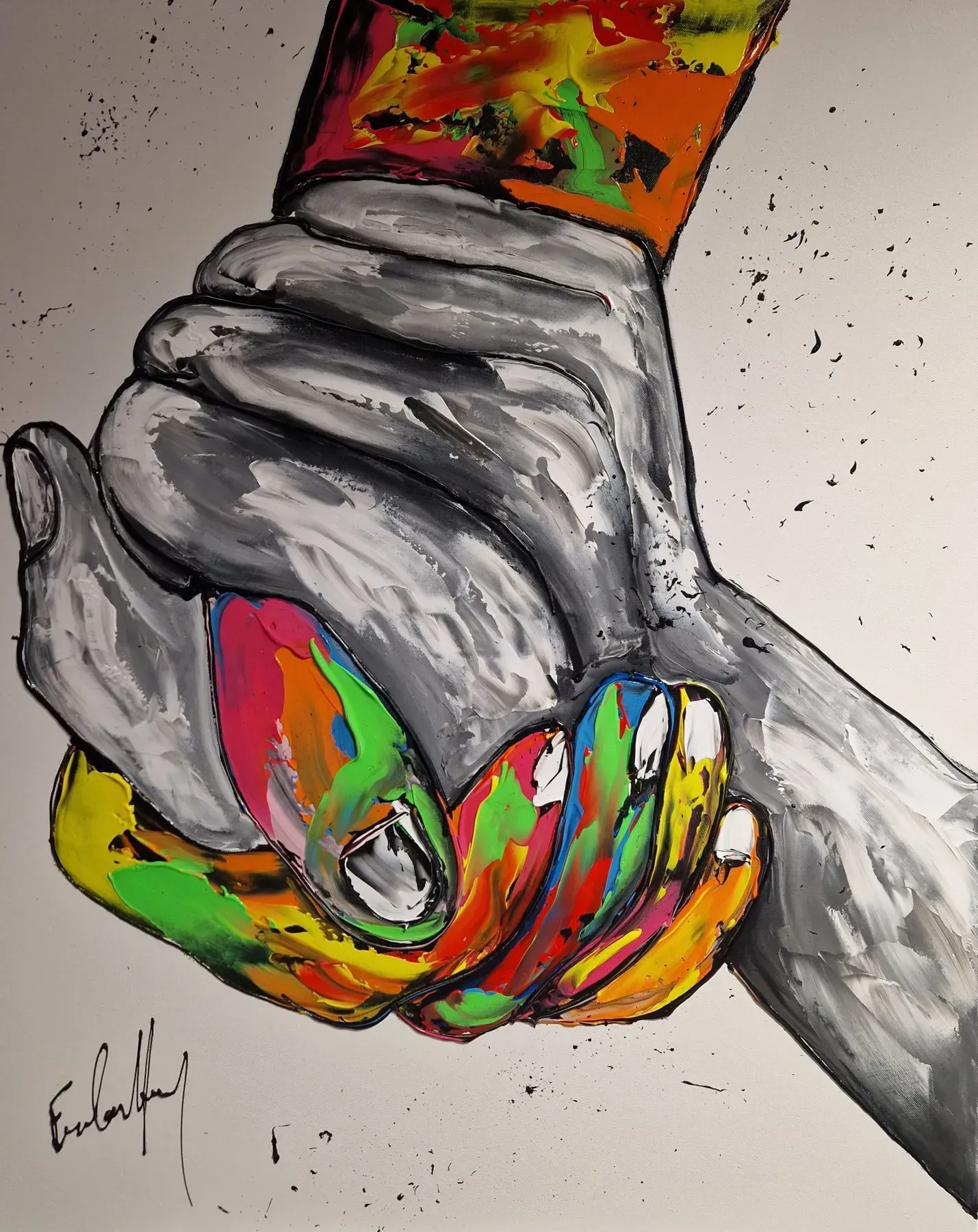
In process-led abstraction, color functions less as mere decoration and more as architecture. A matte plane absorbs light, flattening space; a satin film mediates; a gloss passage throws reflections, activating the viewer’s movement across the work. Henry Escobar’s chromatic decisions often pair hue with finish to orchestrate spatial feeling—cool compression versus warm expansion, both enacted through surface.
Pigments have behavior. High-tinting organic colors saturate thin films easily; earth pigments offer granular bodies that register in brushwork. When paired with mediums, colors become structural: heavy gels suspend marks above the ground; fluid acrylics yield stains that sink, read as memory embedded in support. Choices about palette complexity are strategic; restraint can amplify material nuance, while contrast can stretch the register of texture and light. Collectors attuned to these dynamics will see how chroma and surface co-author the picture.
Practical connoisseurship follows: observe transitions at edges for halo effects (a sign of bleeding or glazing), examine surface for surfactant residues (sheen differences in acrylics), and note varnish decisions. A removable varnish may consolidate gloss and protect; absence of varnish leaves unmediated material truth. Both approaches have validity, but they signal different philosophies of presentation and care. The bilingual guide on color perception offers practical frameworks for reading these signals, Seeing With Color: Abstraction and the Mind.
Dialogues with Contemporary Movements
Escobar’s material focus converses with several postwar trajectories. Minimalism’s emphasis on structure and clarity emerges here as sensory economy, where fewer marks carry greater responsibility. ZERO’s preference for light and reduction echoes in passages that invite reflection to complete the composition. Process art’s inquiries—how material behaves, how time inscribes itself—inflect the work without spectacle.
Contemporary abstraction also dialogues with image-saturated culture. By centering material presence, artists reassert the value of touch over digital ubiquity. Henry Escobar’s works propose an ethics of looking: slow reading, sensitivity to subtle changes, respect for craft. Such values have collecting relevance. They stabilize taste beyond trend cycles, favoring works whose structural intelligence keeps speaking long after novelty fades.
Collecting Material Intelligence
Works like Escobar’s reward close inspection and informed stewardship. Start by reading construction: support, ground, binder, interventions. Condition signals include craquelure (more common in oil films), cupping or lifting at edges, surfactant leaching in acrylics (remedied professionally), and panel warping (managed by proper framing and environment). Gloss variation should feel intentional; unexpected blooms or fogging may indicate varnish issues.
Presentation matters. Float mounting honors edge decisions; spacers prevent glazing contact with textured surfaces; UV-filter glazing moderates light exposure without eliminating necessary illumination. Humidity stability reduces stress on supports. Documentation—studio notes, provenance, high-quality images—builds confidence. For broader collecting strategies, including signals of quality and care, see the guide for new collectors, First Steps, Lasting Collections.
If considering works on paper or prints by Henry Escobar, edition clarity (fraction, AP, PP), paper choice (cotton rag, coated stock), and ink stability matter. In paintings or mixed-media works, prioritize reading the physical grammar: do structural decisions align with the visual thrust? A coherent dialogue between surface and color is a durable measure of quality.
Conclusion
Henry Escobar’s contemporary abstraction restores matter to the heart of looking. The works ask us to feel weight, light, and resistance—to read how surface and color perform structure. For collectors, this yields both aesthetic depth and practical clarity: when the logic of a painting’s making is legible, living with it becomes a sustained pleasure. Select pieces where material intelligence is visible and coherent, and steward them thoughtfully. In such works, process is not just a means; it is the content—quietly resonant, enduring.