
Superflat Blossoms: Collecting Murakami’s Flowers
Takashi Murakami’s flower works radiate joy while embodying rigorous craft. This bilingual guide helps collectors read the Superflat language, understand editions and condition, and frame and preserve with confidence—so the flowers’ cultural charge endures.
The smiling flowers of Takashi Murakami invite instant affection: saturated petals, crisp outlines, and faces that oscillate between bliss and mischief. Yet behind the cheer lies an exacting practice that rewards slow looking. These works transmit a Superflat philosophy—flattening depth, hierarchy, and boundaries between high art and pop culture—through materials handled with near-industrial precision.
For collectors and enthusiasts, Murakami’s flowers are an ideal entry point to contemporary pop art: recognizable, resonant, and carefully produced across paintings and prints. This guide decodes the motif, clarifies edition signals, maps condition checks, and shares conservation strategies, so you can buy and live with the works confidently.
The Flower Motif Explained
Murakami’s flowers reduce complexity to clarity: petals become uniform color fields, faces sit within a circular schema, and compositions stack or scatter blooms rhythmically. The “flatness” is not a limitation but a choice—an aesthetic that celebrates surface as a site of meaning. Harmony comes from repetition; energy from deviations in palette, scale, and expression.
Culturally, the flowers bridge joy and critique. They feel accessible in the way icons do, yet they carry a knowing wink at consumer desire, branding, and the way images travel. As a collector, attend to the orchestration: density of blooms, balance of warm and cool colors, and the interplay of smiling and open-mouthed faces. These choices shape emotional tone, from meditative to exuberant.
Superflat Craft and Materials
In paintings, expect immaculate surfaces: flat color laid with precision, edges that feel printed rather than brushed, and a finish that resists texture. The work’s power relies on consistency; slight deviations—dust trapped in varnish, unintended surface scuffs—interrupt the seamless message. Murakami’s studio is known for high production standards, and that shows in the crispness.
In prints, look for clarity in line, saturation, and registration. Offset lithographs often present razor-sharp outlines and even color floods; silkscreens tend to display dense pigments and tactile ink layers, sometimes with special papers or foils. Read paper quality, blind stamps, and margins carefully. Premium production is part of the value proposition—trust your eyes and fingertips.
Featured Works
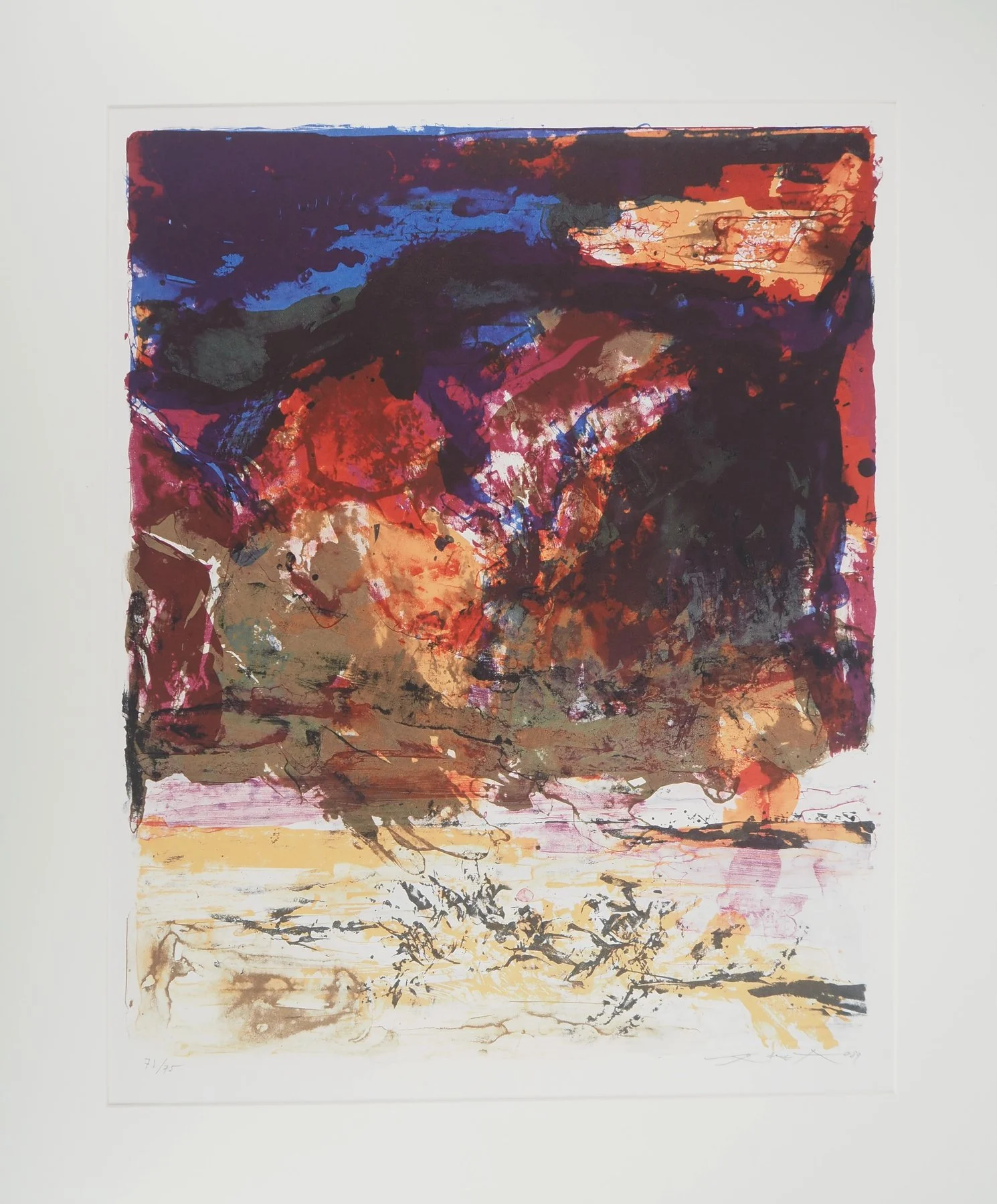


Editions, Signatures, and Scarcity
Edition numbers carry decisive meaning. A fraction like 23/300 signals the print’s place in a defined series; AP (Artist’s Proof) or HC (Hors Commerce) indicate special sets outside the regular run. Signatures—hand-signed versus unsigned—and clear certificates of authenticity strengthen provenance. To deepen your understanding, see Numbers, Scarcity, and the Print Promise.
Differentiate limited fine prints from open-edition posters. Fine prints typically include edition numbers, quality papers, and studio or publisher markings. Posters may be high-quality, yet lack edition clarity and durability signals. When evaluating value, edition size, signature presence, and documentation coherence are key; keep certificates and invoices together for future sales or appraisals.
Condition and Color Assessment
Color is the first truth. Examine under neutral light for uniform saturation, consistent blacks, and clean whites. In prints, look for UV fading, paper burn, handling creases, corner dings, and surface scuffs. Check margins for pinholes or tape residue—common in works that have been previously framed improperly.
For paintings, assess surface continuity: scratches on glossy areas, micro-abrasions, and edge rubs can disrupt the Superflat effect. Confirm that frames and spacers never touch painted surfaces. Note warping or bowing, especially on large works. Condition is not just cosmetic—it preserves the conceptual integrity of flatness.
Framing and Conservation Basics
Use UV-filtering glazing (museum acrylic is lighter and safer than glass), archival mats, and reversible hinging with Japanese paper and wheat starch paste for prints. Employ spacers so the glazing never touches the artwork. For paintings, consider floating or shadowbox frames that protect edges while preserving the flat visual field.
Display away from direct sunlight and heat sources. Keep relative humidity around 45–55% and temperature stable. Handle with clean, dry hands or nitrile gloves; never laminate or stick-mount. Store certificates separately but accessible—provenance lives in paperwork as much as in ink. Good framing and care are investments that maintain both joy and value.
Market Signals and Patience
Murakami’s flowers occupy a rare zone of broad desire and disciplined craft. Markets ebb and flow, but cultural resonance endures. Buy with patience and clarity: strong condition, credible edition markings, and honest provenance. Build a cohesive collection—through palette families, scale dialogues, or pairing prints with a single painting—to amplify aesthetic impact.
If you’re weighing cultural weight alongside craft and scarcity, read Why Takashi Murakami’s Superflat Universe Commands Such Value. Then let your eyes lead. Superflat is about seeing the surface truth; your decisions should reflect that same clarity.
In the end, Murakami’s flowers ask us to honor delight without sacrificing rigor. Trust materials and condition, respect edition signals, frame meticulously, and collect slowly. The result: a living conversation between image and care—joy that holds its shape.