
Hammered Light: Aubertin’s Tableau Clous
Bernard Aubertin’s Tableau Clous translate hammer and nail into a luminous monochrome relief. This article clarifies context, technique, and care, so collectors read these works with confidence and pleasure.
Bernard Aubertin’s Tableau Clous occupy a precise, resonant corner of postwar European art. In these nail reliefs, the simple act of hammering becomes an instrument of light and measure: a field of nails punctuates painted monochrome, turning surface into a disciplined topography where red, shadow, and reflection speak. To approach Aubertin’s Tableau Clous is to read a grammar of reduction and ritual—an art that stages intensity through restraint. The term “Tableau Clous” names the works directly: panels structured by nails, a vocabulary he honed alongside the European tendency toward clarity after mid-century rupture.
Within this refined register, the nail is not ornament. It is both mark and material, a unit of energy inserted into matter. The works stand within the broader program of the ZERO movement—an international constellation where light, seriality, and silence answered the urgency of the postwar world by limiting gestures and amplifying phenomena. For Bernard Aubertin, the Tableau Clous distill that ambition into a relief that feels simultaneously austere and vibratory.
Origins and ZERO Context
Aubertin’s Tableau Clous emerge from a postwar turn toward reduction that unfolded across Europe in the late 1950s and 1960s. Artists sought new beginnings—zero points—where painting and sculpture could be rebuilt from elemental acts: monochrome color, repetition, light. Within this frame, hammering nails into a painted plane offered both a radical simplicity and an instrument for optical change. The surface is not depicted; it is constructed, measured in increments of metal and paint.
The nail relief aligns with ZERO’s attention to light and rhythm. Nail heads catch, scatter, and partially absorb light, producing an ever-shifting field that changes with angle and hour. Aubertin’s clarity around such phenomena places him in dialogue with contemporaries who pursued similar aims through different materials. For a practical overview of his materials across red, nails, and flame, see Bernard Aubertin: Reading Red, Nails, and Fire.
Reading Aubertin’s Tableau Clous
“Reading” the Tableau Clous begins with understanding the work as relief. What first appears as a monochrome plane resolves, upon close viewing, into a field of protrusions that articulate space. Individual nails become units of a larger rhythm—grids, diagonals, or clusters—that maintain strict order while allowing small variances inherent to the hand-driven process. This balance between system and touch is central: the hammer’s percussive action imprints the surface with time.
Color, often red, carries structural weight. Red in Aubertin’s language is not an emotive flourish; it is an elemental ground that asserts the painting’s unity. Against it, metal and shadow register as modulation rather than contrast. To read the work is to attune to subtle shifts—how nail heads reflect warmer or cooler light, how micro-shadows stack along the direction of illumination, how the painted ground absorbs glare and stabilizes perception.
Featured Works
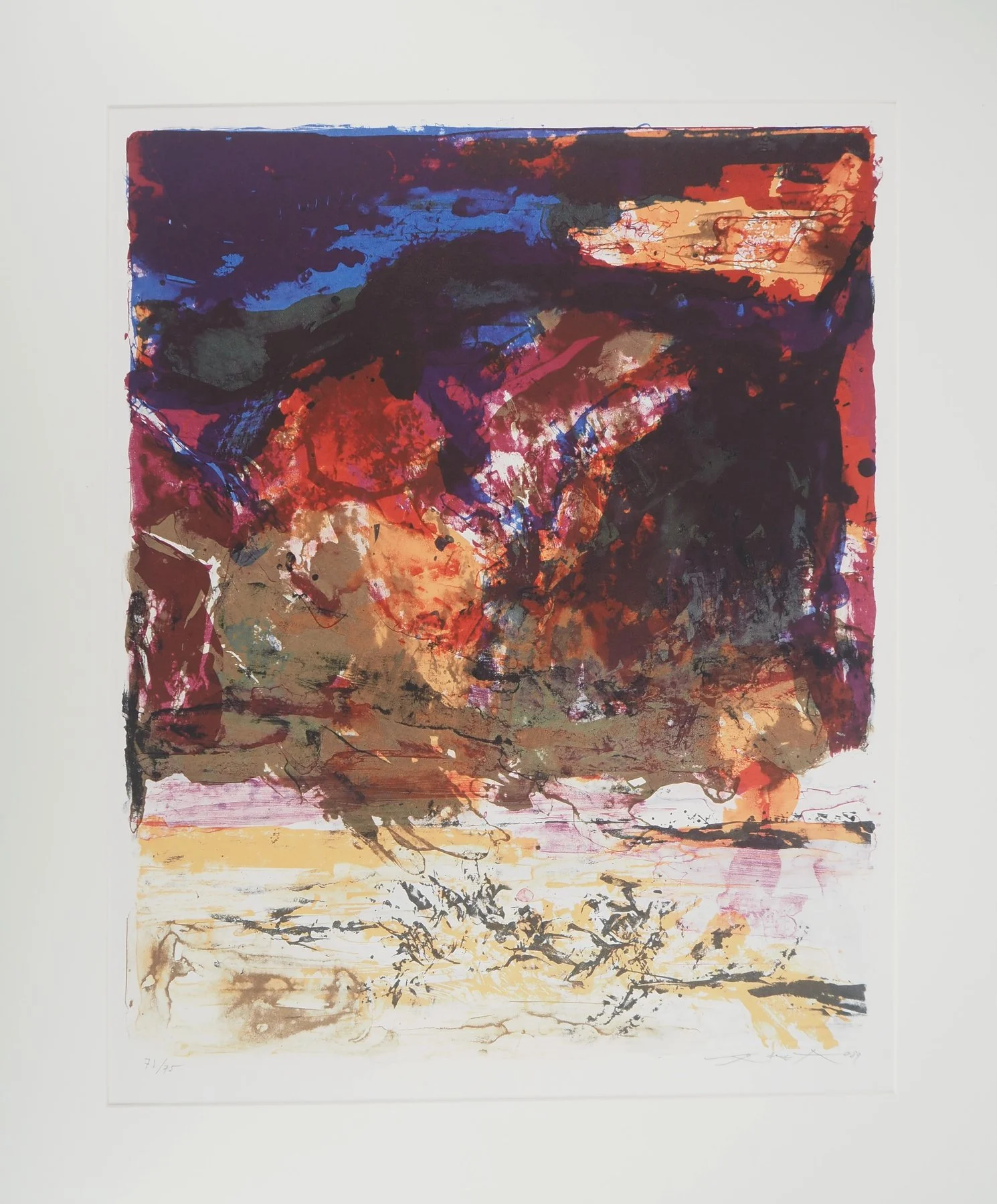

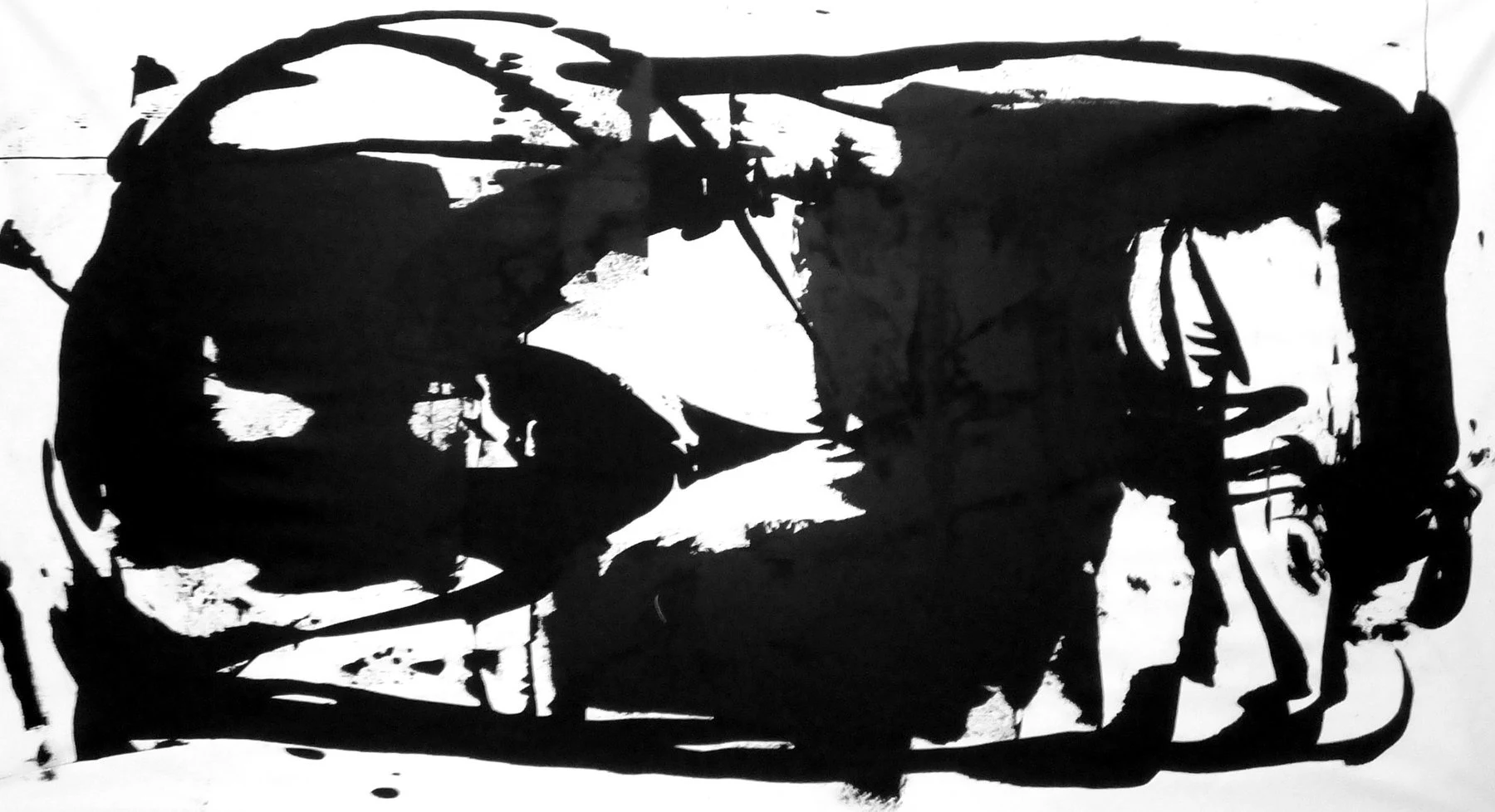
Material Logic of Tableau Clous
Aubertin’s Tableau Clous typically involve a rigid support (wood panel), a monochrome paint layer, and a systematic insertion of steel nails. The sequence matters. The painted ground is prepared to form a single chromatic field; nails are then driven to uniform or intentionally varied depths. This operation transforms the two-dimensional plane into a relief that remains sufficiently shallow to be read as “painting,” yet tactile enough to function as a sculptural surface.
Material interactions drive the work’s visual language. Steel nail heads introduce reflective highlights; shafts, partly buried, create minute shadows; the painted layer surrounding each nail can slightly compress, forming micro-ridges that catch light differently. The density of placement—tight grids or measured spacing—determines optical vibration. Because all elements are regular and uncolored beyond the monochrome ground, the eye reads phenomena rather than representation.
Rhythm, Ritual, and Time
The Tableau Clous are repetitions, but not mechanical repetitions. In their making, each hammer strike constitutes a unit of measure—gesture, sound, and resistance. This ritual quality aligns with the meditative ethos found across ZERO practices, where repetition acts as a method of clearing: emptying the picture of narrative so that matter and light remain. Aubertin’s rhythm is visible as pattern and palpable as the sensibility guiding placement and depth.
Time, in these works, is twofold. There is the time of making, inscribed by serial hammerings; and the time of viewing, extended as the eye migrates across fields of scintillation. As a viewer shifts position, the reflections animate; as daylight changes, the relief recalibrates. The work’s identity is a durational encounter with light on matter—a slow choreography of attention in which small differences become luscious.
Light, Shadow, and Vision
The Tableau Clous teach how light draws. When light falls obliquely across a nail field, each head functions as a micro-mirror; the shadows behind each protrusion aggregate into soft cadences. The painting’s “image” is an emergent product of the environment—a negotiation among source, angle, surface, and viewer. This makes the works especially responsive in domestic settings with varied illumination across the day.
The eye reads pattern before detail, then relaxes into subtlety. In an Aubertin relief, the first impression is a disciplined grid or ordered swarm. Soon, vision becomes haptic: one senses the surface rather than simply seeing it. This sensibility—rooted in clarity, devoid of narrative—was essential to the postwar desire for artworks that reengage perception itself. For a broader context of Aubertin’s reduced language and its calm intensity, see Zero Heat: Bernard Aubertin’s Radical Calm.
Collecting and Conservation Insights
For collectors, the Tableau Clous offer durable clarity and lived pleasure. Their materiality, however, invites specific care. Consider structural integrity first: weight-bearing panels should be hung from robust hardware, with wall anchors rated for load. A deep shadow box or float frame with spacers protects protrusions from accidental contact, and glazing should be set away from the relief to avoid abrasion. Avoid placing the work where passersby might brush against the surface.
Environmental stability supports longevity. Moderate humidity reduces corrosion risk on nail heads; clean, dry air minimizes dust accumulation around protrusions. When dust inevitably settles, use a gentle, contactless method—compressed air at low pressure, held at a distance—to lift particles. Avoid liquid cleaners entirely. Condition checks should focus on rusting nail heads, loosening nails, and micro-cracks in the paint around insertions. If any movement or paint loss is observed, consult a conservator experienced with mixed-material reliefs.
As with all postwar reliefs, provenance and documentation matter. Confirm the work’s title, date, technique description (nail relief on panel, monochrome paint), and any inscriptions or labels on the reverse. Authenticity judgments rely on consistency in material handling, serial logic, and the particularities of Aubertin’s monochrome grounds. Display strategy should celebrate light: allow one primary source to articulate the relief, then test secondary fills. The work will tell you when rhythm becomes glare; adjust accordingly.
Conclusion: Clarity with Resonance
The Tableau Clous distill Bernard Aubertin’s commitment to reduction into a surface that vibrates with attentiveness. Nails, aligned with discipline, enact a philosophy of measure; monochrome paint stabilizes vision so that light performs. For collectors, these works offer a refined material language and sustained perceptual pleasure—an art that grows as one learns to see with it. In a culture saturated by images, Aubertin returns us to the elemental duet: matter and light, hammered and luminous, quiet and inexhaustible.